Skip to content

Posts

Predictive Hall thruster modeling

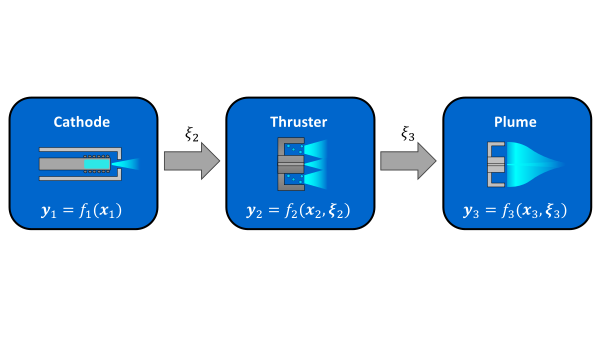
Hall thrusters are a form of in-space electric propulsion in which a plasma discharge is maintained using crossed electric and magnetic (i.e. \(\mathbf{E}\times \mathbf{B}\)) fields. Hall thrusters have exploded in popularity in recent years due to their high efficiency and low cost. One of the primary challenges in Hall thruster development is accurately modeling the discharge plasma, especially with respect to the poorly understood physics of electron transport and the coupling of the thruster to its testing environment. These and other related issues introduce large uncertainties to model predictions and prevent the applicability of ground-test data to in-space operation. The ongoing work of the JANUS institute is to develop a predictive model of the Hall thruster operating in a vacuum chamber and to reliably make confidence-bounded estimates of in-space performance.
Hall thruster model diagram

Fig 1. The predictive Hall thruster modeling framework (Eckels et al. 2024).
Electrospray thruster design

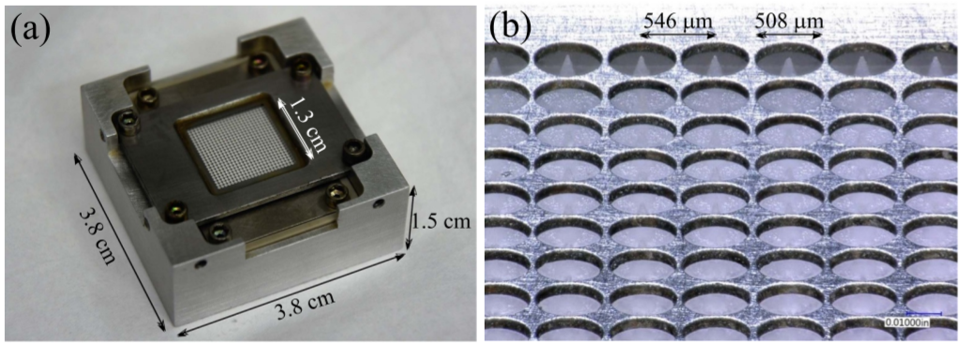
Electrospray thrusters produce thrust by extracting and accelerating liquid ionic droplets from a porous substrate using a strong applied electric field. The task of scaling electrospray thrusters to missions with higher thrust requirements is one of seeking robust designs in the presence of high manufacturing uncertainties in the extractor grid and porous substrate. This project explored Bayesian methods for aiding electrospray thruster design in light of these manufacturing uncertainties.

AFET-2 thruster

Fig 1. The AFET-2 electrospray thruster (Natisan et al. 2020).

High-voltage battery firmware

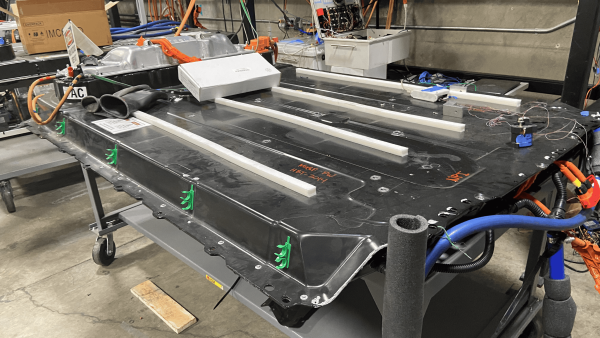
As part of a summer internship at Tesla on the battery firmware subteam, a series of upgrades to the battery testing infrastructure were underway. A new suite of tests were being developed for the newest Model 3 and semi-truck battery packs. The battery firmware is responsible for interfacing with the vehicle CAN networks, including intercepting and responding to messages involved with charging and discharging the battery, as well as monitoring the battery's state of charge, temperature, performance, and long-term health. Testing the battery firmware involves simulating the vehicle CAN signals to run repeated cycles of charging and discharging, and to purposely fault the system to ensure proper shutdown and recovery.

High-voltage EV battery

Fig 1. A high-voltage electric vehicle (EV) battery on a testing stand.

Chess robot

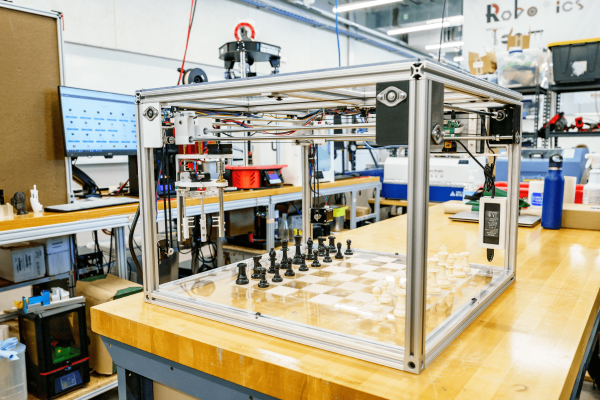
Introducing: the chess-playing robot that will defeat any opponent who challenges it (mostly because, you know.. Stockfish). The robot is composed of a sleek metal frame and a sturdy acrylic playing surface with a laser-engraved chessboard. A gantry system powered by stepper motors and timing belts moves a claw-like gripper around the board to enact the will of its chess engine AI. Roughly the size of a coffee table and noticeably heavier, this bot is sure to fill out your entire living room with a family-friendly competitive atmosphere.

Chess robot

Fig 1. The Chess robot in its natural environment (circa 2021).

Neural networks for ultrasonic defect detection

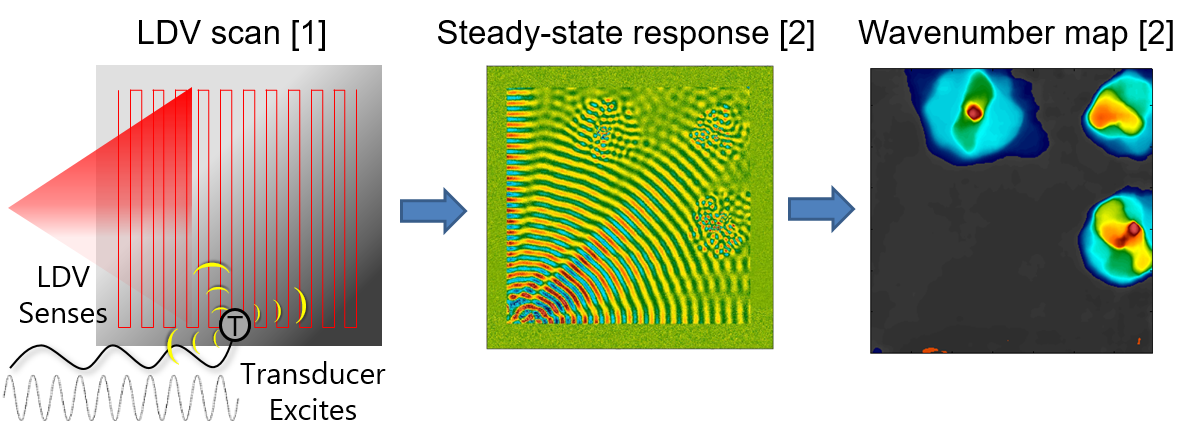
An ultrasonic transducer excites a plate-like structure to steady-state and a laser Doppler vibrometer (LDV) scanner obtains the surface velocity response. The wavenumber of the propagating waves is dependent on local changes in thickness of the plate, which indicates damage such as corrosion, cracking, or delamination. This project involved training a convolutional neural network (CNN) on simulated ultrasonic data to classify plate thickness and detect damages and defects. The CNN performed orders of magnitude faster than traditional processing methods and provided more accurate results.

ASSESS system illustration

Fig 1. The Acoustic Steady-State Excitation Spatial Spectroscopy (ASSESS) method.

Accessibility constraint mapping

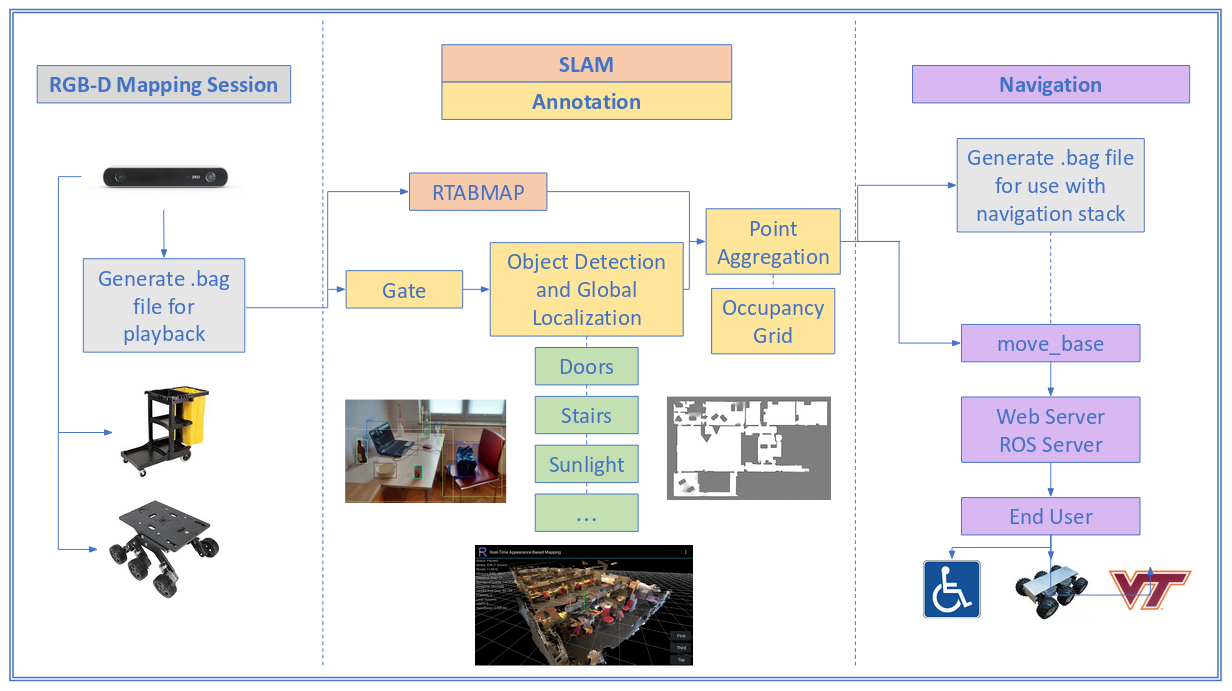
Off-road navigation often involves difficult-to-traverse terrain or barriers, such as stairs, sidewalk curbs, construction sites, uneven pavement, etc. Global navigation planning provided by traditional mapping software (e.g. Google maps, Waze) does not typically account for such constraints, and may not be able to plan for unforeseen constraints that vary on a day-to-day basis such as temporary obstacles or path deteriorations. This project seeks to optimize path planning in light of variable off-road navigation constraints by building navigation maps in real-time using simultaneous localization and mapping (SLAM) software. Potential end-users of off-road navigation maps include autonomous rovers and handicapped persons.

Accessibility mapping overview

Fig 1. Overview of the accessibility constraint mapping framework.

Bubble Bobble

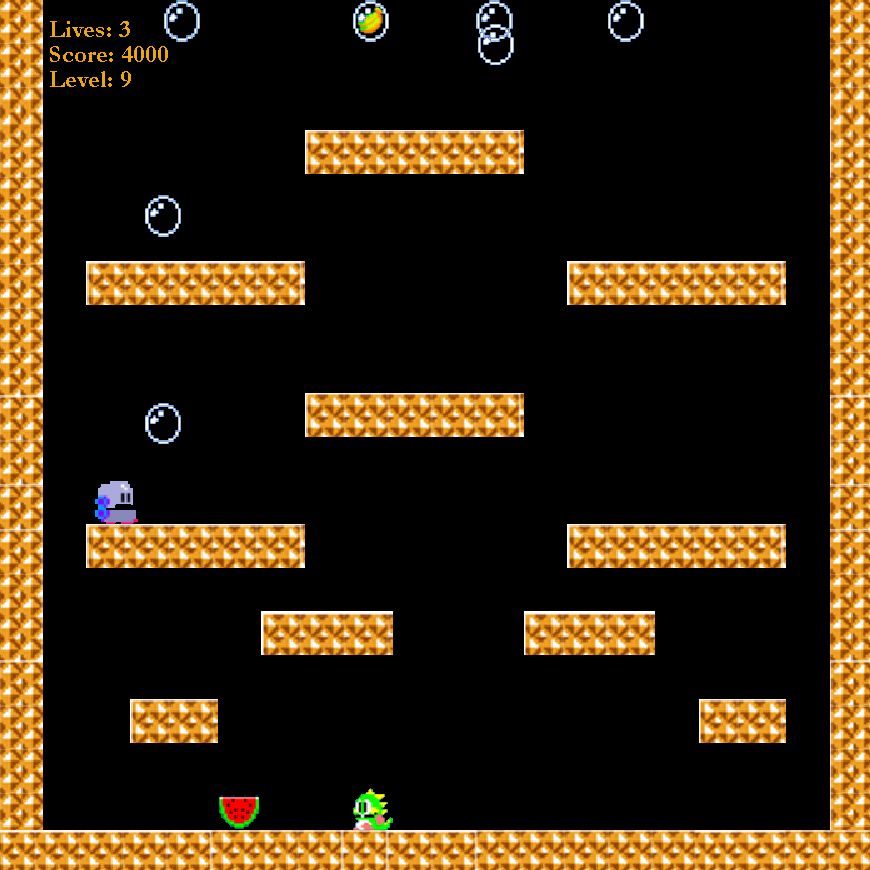
Welcome to Bubble Bobble: The Java Mid-Life Crisis of Gaming!

Are you a weary traveler on the vast, uncharted plains of the internet, relentlessly searching for something—anything—to stave off the crushing ennui of your existence? Well, my friend, you’ve taken a wrong turn into the back alley of the web, and what’s that lying in a cardboard box? Why, it’s ✨Bubble Bobble✨, the game no one asked for, brought to you by the coding equivalent of duct tape and prayers!

Bubble Bobble

Fig 1. One of the hardest levels in the 8-bit arcade classic Bubble Bobble™

Guitar stool

You’ve somehow stumbled upon a post about the creation of an arguably impractical, yet undeniably charming guitar stool. Buckle up, because this tale of woodworking prowess and mild frustration is not just a tale—it’s a journey.